The Talent Question: How Regional Tech Founders Are Winning the Hiring Game Without Playing by City Rules
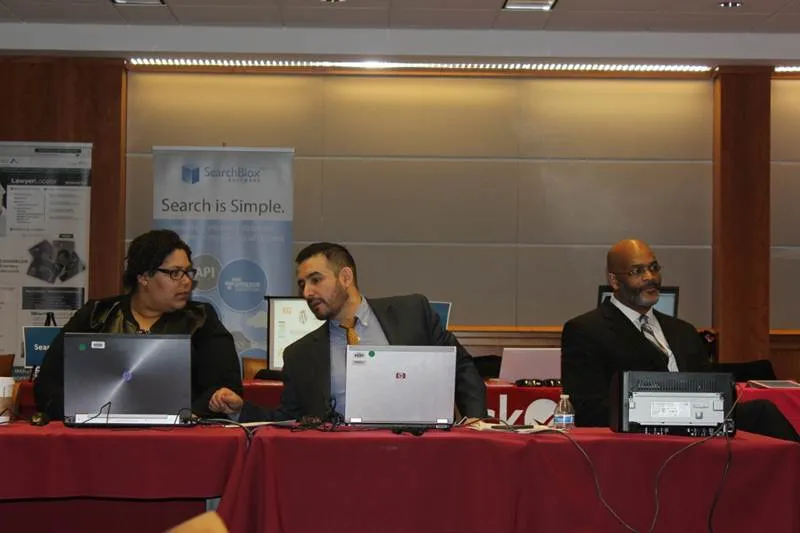
Photo: Federal Communications Commission, Public domain, via Wikimedia Commons
Ask a venture-backed founder in Sydney about hiring engineers and the conversation will almost inevitably turn to salaries, competing offers, and the relentless pressure of a shallow talent pool. Ask a founder building a development team in Mackay, and the conversation is different — more nuanced, and in many ways more interesting. The constraints are real, but so are the advantages, and the companies that have learned to articulate those advantages honestly are building some of the most stable, capable technical teams in the country.
This is not a feel-good story about lifestyle. It is a practical examination of what actually works when you are recruiting API engineers from a regional base.
Reframing the Conversation
The first mistake most regional founders make in hiring is attempting to compete directly with metropolitan employers on metropolitan terms. Offering slightly below-market Sydney salaries for a role based in Mackay is not a value proposition — it is a compromise, and candidates will sense it immediately.
The more effective approach is to reframe the conversation entirely. A role in Mackay is not a lesser version of a role in Sydney; it is a different kind of role, with different trade-offs. The candidates who will thrive in that environment are the ones for whom those trade-offs represent genuine advantages — and there are more of them than the conventional wisdom suggests.
Senior engineers with young families, developers who grew up in regional Queensland and want to return, professionals who have spent a decade in a capital city and are quietly exhausted by it — these are not niche candidates. They represent a substantial and largely underserved cohort of the Australian technology workforce. The founders who position their companies clearly for this audience, rather than apologetically for everyone, tend to fill roles faster and retain staff longer.
Compensation That Reflects Regional Reality
Salary benchmarking for regional technology roles requires a different frame of reference than metropolitan surveys provide. The relevant comparison is not what a senior API engineer earns in Pyrmont — it is what that engineer's compensation package delivers in terms of actual quality of life.
A developer earning $145,000 in Sydney, paying $3,200 per month in rent and spending two hours a day commuting, is in a materially different position to a developer earning $120,000 in Mackay, owning a four-bedroom home with a mortgage under $2,000 per month and commuting by bicycle. Making this calculation explicit, with real numbers and genuine transparency, is more persuasive than any amount of employer branding language.
This does not mean that regional employers can simply pay below-market rates and expect gratitude. The base salary must be competitive within the regional context, and supplementary benefits — genuine flexibility, professional development budgets, equity where applicable — matter considerably. But the total compensation story, told honestly, is often far more attractive than founders assume.
Remote-First as a Recruitment Tool
The past several years have permanently altered the geography of Australian software development. A meaningful proportion of the country's most capable engineers now work remotely, either by arrangement with a metropolitan employer or as independent contractors. Regional tech companies that build genuinely remote-first cultures — not remote-tolerant, but remote-first — can access this talent pool directly.
For an API company based in Mackay, a distributed team model can serve multiple purposes simultaneously. It allows the company to recruit specialists in areas where local supply is thin, builds time-zone coverage across the Australian eastern seaboard, and creates a credible story about geographic flexibility that appeals to candidates who value autonomy. The Mackay office becomes the anchor and the culture-setting environment, rather than the constraint.
The critical caveat is that remote-first must be genuine. Candidates who have worked in ostensibly flexible environments that quietly penalise remote participation are adept at identifying the warning signs during a recruitment process. Documentation practices, meeting cadences, promotion patterns, and tooling choices all signal whether remote work is truly equal or merely tolerated.
Building the Professional Development Case
One of the most consistent concerns raised by candidates considering regional roles is career progression. Will working outside a major city limit access to the professional networks, conferences, and peer learning that drive career development in technical fields?
The honest answer is: it might, if the employer does not actively compensate for it. The founders who address this directly — with funded conference attendance, structured mentorship programmes, contributions to open-source projects, and encouragement of external speaking and writing — tend to attract candidates who take their professional development seriously. Ironically, the engineers who ask hardest about growth opportunities are often the ones most worth hiring.
There is also a genuine case to be made that regional technical roles can accelerate certain kinds of growth that metropolitan positions do not. Engineers who work in smaller, more autonomous teams tend to develop broader skill sets faster. Those who work on complex integration problems — legacy industrial systems, heterogeneous data sources, constrained infrastructure environments — build a depth of problem-solving experience that is genuinely differentiated in the market.
Community and Culture as Retention Mechanisms
Retaining technical talent in a regional location ultimately comes down to whether people feel connected — to their work, to their colleagues, and to the place itself. Founders who invest in building a genuine sense of community within their teams, and who actively help new hires build connections within Mackay more broadly, see meaningfully better retention than those who treat the social dimension as peripheral.
This might mean organising regular team events that extend beyond work, supporting involvement in local technology communities and industry groups, or simply being deliberate about the cultural signals the company sends. Engineers who feel that they have genuinely joined something — a team with a clear identity and a place with real character — are far less likely to be lured back to a capital city by a marginal salary increment.
Mackay is not a compromise destination. It is a city with a distinct industrial heritage, a growing technology sector, and a quality of life that is increasingly difficult to replicate in Australia's congested metropolitan centres. The founders who tell that story with confidence, specificity, and honesty are the ones who are winning the talent question — not despite their location, but because of it.