When the Wet Season Comes: Engineering API Resilience for Australia's Harshest Climates

Photo by Photo by Florencia Lewis on Unsplash on Unsplash
In Mackay, the calendar does not divide neatly into four seasons. There is the build-up, the wet, and the recovery — and for any technology infrastructure operating in the region, each phase carries its own set of risks. Cyclone Debbie in 2017 left portions of the Whitsunday coast without power for weeks. The 2008 Mackay floods inundated commercial districts overnight. These are not edge cases for a regional operator; they are recurring operational realities.
Capital city data centres are designed around different threat models. Sydney worries about heat spikes and CBD fibre cuts. Melbourne contends with unpredictable cool-season storms. But for a technology company operating out of Queensland's tropical north, the design brief is fundamentally different. APIs that serve regional clients — whether those clients are in agriculture, mining services, or tourism — must be architected to degrade gracefully, recover quickly, and ideally keep running through the chaos entirely.
This guide is for developers and infrastructure engineers who understand that resilience is not a feature you add after launch. It is a constraint you design around from day one.
Understanding the Threat Landscape
Before selecting patterns, it is worth being precise about what "extreme weather" actually means for API infrastructure in regional Queensland.
Power disruptions are the most common threat. A sustained wet season event can knock out grid power for hours or days across wide areas. Unlike a brief outage in an urban centre — where restoration is typically measured in minutes — regional outages routinely extend across multiple days. Any system that assumes reliable mains power is a system that will eventually fail its users at the worst possible moment.
Connectivity disruptions follow closely. Fibre routes in regional areas are fewer and less redundant than metropolitan equivalents. A single backhoe strike or flood-damaged conduit can sever the primary path between a regional office and its cloud provider. Satellite and 4G LTE fallback options exist, but they carry latency and bandwidth constraints that can render a poorly designed API effectively unusable.
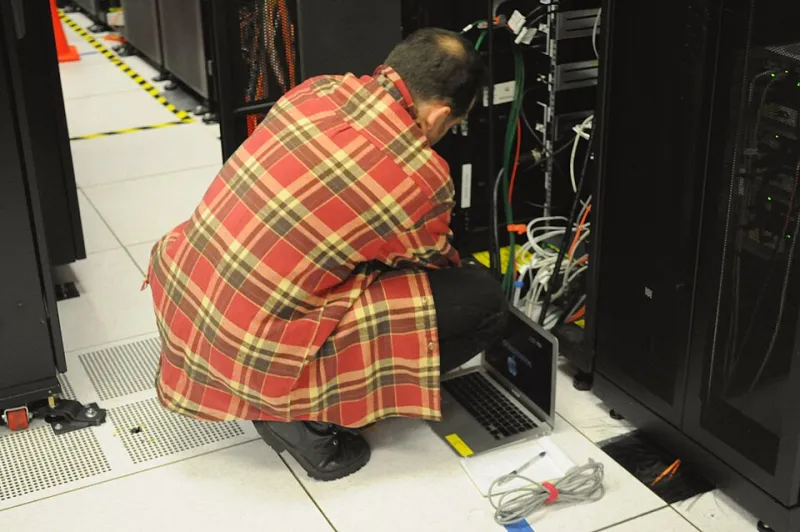
Heat and humidity compound hardware failure rates. Equipment housed in on-premises server rooms that lose air conditioning during a power event can reach damaging temperatures within hours. This is not a theoretical concern — it is a maintenance reality for anyone running physical infrastructure north of the Tropic of Capricorn.
Redundancy Patterns Worth Implementing
The foundational principle of weather-resilient API architecture is eliminating single points of failure at every layer. This sounds obvious, but the implementation details matter enormously.
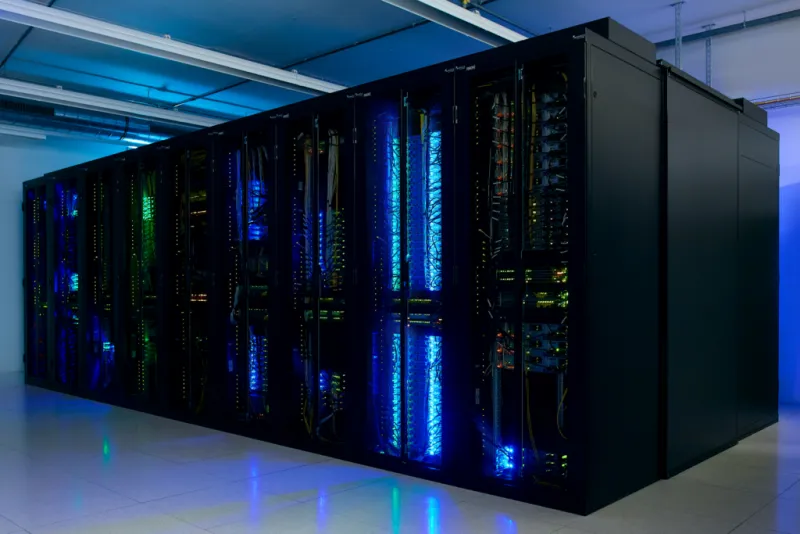
Active-active multi-region deployment is the most robust approach for APIs where uptime is critical. Rather than relying on a primary region with a passive failover, active-active configurations route traffic across two or more geographically separated environments simultaneously. For Australian operators, pairing a Sydney or Melbourne cloud region with an Asia-Pacific edge node — Singapore or Tokyo are common choices — provides meaningful redundancy without introducing prohibitive latency for domestic users.
Circuit breaker patterns protect downstream services when upstream dependencies become unreliable. When a third-party data provider or internal microservice begins returning errors at an elevated rate, a well-implemented circuit breaker stops hammering the failing service and returns a cached or degraded response instead. For a regional API serving, say, a port logistics operator during a cyclone closure, returning stale-but-useful data is vastly preferable to returning nothing at all.
Asynchronous message queuing decouples producers from consumers in ways that tolerate intermittent connectivity. If a field device — a sensor on a cane harvester, a monitoring unit at a mine site — loses its upstream connection temporarily, a queue-backed API can accept and buffer those messages the moment connectivity resumes, rather than discarding them. Tools such as RabbitMQ, AWS SQS, or Azure Service Bus all support this pattern effectively.
Edge Computing as a Regional Strategy
One of the more consequential architectural shifts available to regional operators is moving computation closer to where it is consumed. Edge computing — deploying lightweight processing nodes at or near the point of data generation — reduces dependence on centralised cloud infrastructure and can maintain basic functionality even when the link to that infrastructure is severed.
For a Mackay-based operator serving clients across the Bowen Basin or the Pioneer Valley, an edge node co-located with a client's on-premises infrastructure can continue processing API requests locally during an outage, synchronising state with the central platform once connectivity is restored. This is not a new concept, but it has become considerably more practical as edge-capable hardware has matured and cloud providers have extended their edge networking offerings into regional Australia.
Content delivery networks (CDNs) with intelligent caching also serve a related function for read-heavy APIs. Responses that do not need to be real-time — reference data, configuration payloads, static lookup tables — can be cached at edge nodes and served without touching the origin server. During a disruption, this cache becomes a lifeline.
Designing for Graceful Degradation
Not every API function is equally critical. A well-designed system distinguishes between operations that must succeed and operations that can be deferred or approximated. This hierarchy should be explicit in the architecture, not implicit in the hope that nothing will go wrong.
Define your API's core contract: what is the minimum viable response your clients need to keep operating? For a fuel distribution platform, that might be the ability to confirm a delivery booking. For a tourism operator, it might be the ability to accept a reservation. Everything else — analytics dashboards, reporting endpoints, administrative tooling — can be gracefully disabled or cached during a degraded state.
Healthcheck endpoints that accurately reflect system state are essential. An API that returns a 200 OK from its healthcheck while silently failing its downstream dependencies is worse than useless during an incident. Invest in healthcheck logic that genuinely interrogates the critical path.
The Recovery Posture
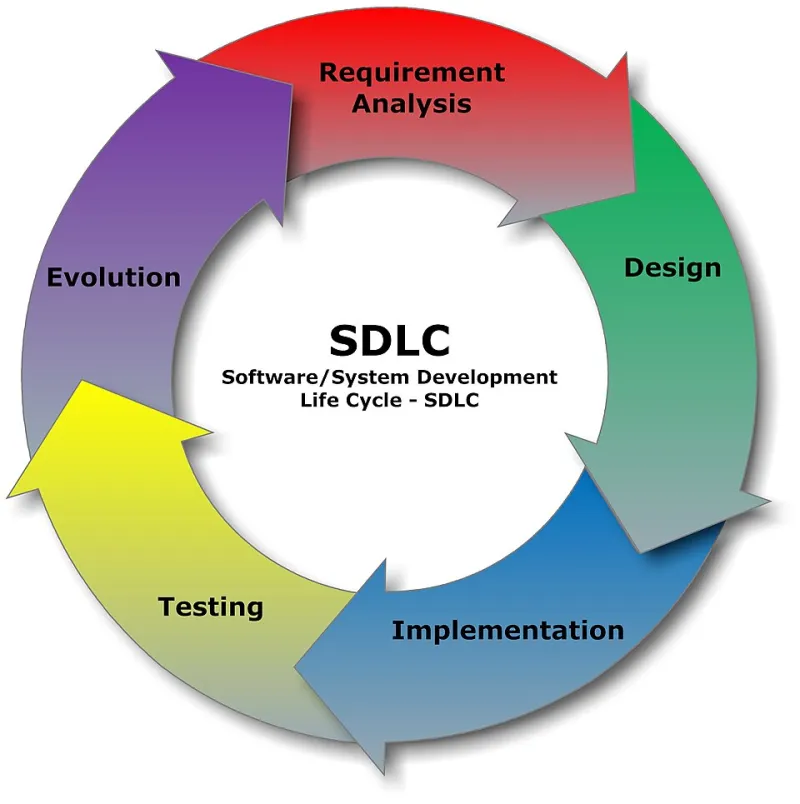
Resilience is not only about staying up during an event. It is equally about recovering cleanly afterwards. Automated runbooks, infrastructure-as-code deployments, and clearly documented recovery procedures reduce the time between "the power came back on" and "the system is fully operational" from hours to minutes.
For teams operating in regional Queensland, where the pool of available on-call engineers may be smaller than in a capital city, automation is not a luxury — it is a staffing strategy. A system that can detect its own degraded state and initiate recovery procedures without human intervention is a system that does not require someone to drive in through floodwater at 2 a.m.
Building for Where You Actually Are
The most important shift is a conceptual one. Regional operators who design their infrastructure with capital city assumptions — reliable power, redundant fibre, temperate conditions — are building systems optimised for somewhere they do not operate. The discipline of regional API engineering starts with acknowledging the actual environment: the humidity, the cyclone seasons, the long distances between exchanges, and the real consequences when systems fail.
At Mackay API, this is not an abstract concern. It is the design brief we work from every day. The tropical north demands a different kind of engineering — and the teams that embrace that constraint tend to build systems that are more resilient than anything a CBD-centric approach would have produced.