From the Cane Fields to the Cloud: How Regional Australia Is Rewriting the Tech Playbook

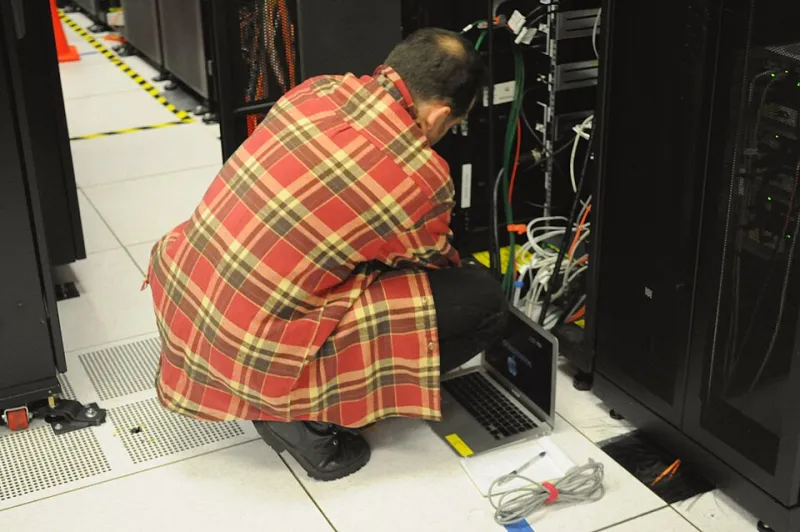
Photo: Pangalau, CC BY-SA 4.0, via Wikimedia Commons
For decades, the unspoken rule of Australian technology was straightforward: if you were serious about building software, you moved to Sydney or Melbourne. The talent was there. The investors were there. The clients were there. Everything else was, by implication, not quite serious enough.
That rule is being broken — quietly, methodically, and with increasing confidence — by a generation of developers, founders, and technical teams who have discovered that geography is no longer the constraint it once was.
Here in Mackay, a city better known for sugar cane and coal than for software sprints, the shift is palpable. API-first development, cloud-native infrastructure, and the normalisation of remote-first work culture have collectively dismantled the old hierarchy. What matters now is not your postcode. It is the quality of your architecture.
The Cost Equation Has Changed Dramatically
The financial case for regional operations is no longer a consolation prize — it is a competitive advantage. Office space in Sydney's CBD commands rates that would make a San Francisco landlord comfortable. Mackay, by contrast, offers commercial space at a fraction of that cost, with a workforce that, while smaller in absolute terms, carries significantly lower salary expectations without any corresponding reduction in technical capability.
Consider the numbers: a mid-level software engineer in Sydney commands a base salary that routinely exceeds $130,000 AUD. In regional centres, comparable expertise is available at $80,000 to $100,000, with meaningfully lower staff turnover driven by lifestyle factors that no inner-city office perks package can replicate. For a team of ten developers, that differential alone funds a substantial cloud infrastructure budget.
The savings do not simply reduce costs — they fund capability. Regional teams are, in practice, reinvesting their overhead advantage directly into tooling, API infrastructure, and the kind of technical debt reduction that city-based teams perpetually defer.
API-First Architecture as the Great Equaliser
The architectural shift toward API-first development has been particularly liberating for regional operators. When your product is fundamentally a set of well-documented, versioned HTTP interfaces rather than a monolithic application tied to a specific server room, physical location becomes almost irrelevant to delivery quality.
A startup in Hobart building a logistics platform for the agricultural sector does not need to be headquartered in Melbourne to serve a Melbourne-based client. The API endpoints are deployed to AWS ap-southeast-2 (Sydney) or ap-southeast-4 (Melbourne), the documentation lives in a developer portal accessible from anywhere, and the integration work happens asynchronously across time zones without friction.
This is not theoretical. Several Queensland-based software firms have in recent years signed enterprise contracts with clients in Singapore, the United Kingdom, and the United States — clients who, in at least some cases, were unaware their technical counterparts were based in regional Queensland until well into the engagement. The work spoke for itself.
Case Study: Agricultural Technology in North Queensland
One instructive example comes from the agri-tech sector, where a small development team based outside Townsville built a suite of APIs for crop yield monitoring and supply chain logistics. Their client base spans three continents. Their infrastructure runs entirely on managed cloud services. Their team of seven engineers has never needed to relocate.
The founders are candid about what made this possible: the decision to build exclusively via RESTful APIs from day one, combined with a documentation-first culture that made onboarding international clients straightforward regardless of time zone. They use webhooks for real-time event delivery, maintain strict versioning discipline, and deploy through a CI/CD pipeline that would be entirely familiar to any team working out of a Surry Hills co-working space.
Geography, in their telling, became irrelevant within eighteen months of launch.
Brisbane as a Bridge, Not a Destination
Brisbane occupies an interesting position in this regional narrative. It is large enough to attract enterprise clients and host meaningful developer communities, yet affordable enough to retain the cost advantages that make regional operations attractive. For many companies, Brisbane functions less as a headquarters and more as a client-facing front — a place to hold quarterly reviews and sign contracts — while the actual engineering work happens in more distributed locations.
This model, sometimes called the "hub and spoke" approach to regional tech, is gaining traction across Queensland specifically. Mackay, Cairns, Rockhampton, and Toowoomba all host small but growing clusters of technical talent that feed into Brisbane-anchored client relationships while maintaining the overhead structures of genuinely regional businesses.
The Infrastructure That Makes It Possible
None of this would be feasible without the underlying infrastructure investment of the past decade. The NBN rollout, whatever its well-documented imperfections, delivered baseline connectivity to regional centres that made remote development teams viable. Subsequent investment in mobile broadband — including the 5G rollout across regional Queensland — has further reduced the practical gap between metropolitan and regional connectivity.
Cloud providers have simultaneously expanded their Australian presence. AWS, Google Cloud, and Microsoft Azure all operate data centres within Australian jurisdiction, meaning that latency to cloud-hosted services from Mackay or Hobart is measured in single-digit milliseconds, not the cross-Pacific delays that once made cloud development from regional Australia a frustrating exercise.
The combination of affordable, reliable connectivity and local cloud infrastructure has effectively removed the last credible technical argument against regional software development.
What This Means for the Industry
The implications extend beyond individual business cases. Regional tech hubs create localised talent pipelines, reduce the pressure on graduates to relocate to capital cities, and contribute to the economic diversification that regional communities have sought for generations. In Mackay, where the economy has historically tracked the fortunes of the mining and agricultural sectors, a growing software industry represents genuine diversification — the kind that survives commodity price cycles.
For the Australian technology industry as a whole, the emergence of credible regional capability is a structural improvement. It distributes risk, broadens the talent base, and creates competitive pressure on the incumbent metropolitan firms to justify their cost structures.
The era of the CBD tech monopoly is not over. But its dominance is being negotiated, one well-documented API at a time.