Closer to the Edge: Why Infrastructure Proximity Is Becoming a Strategic Differentiator for Regional API Teams
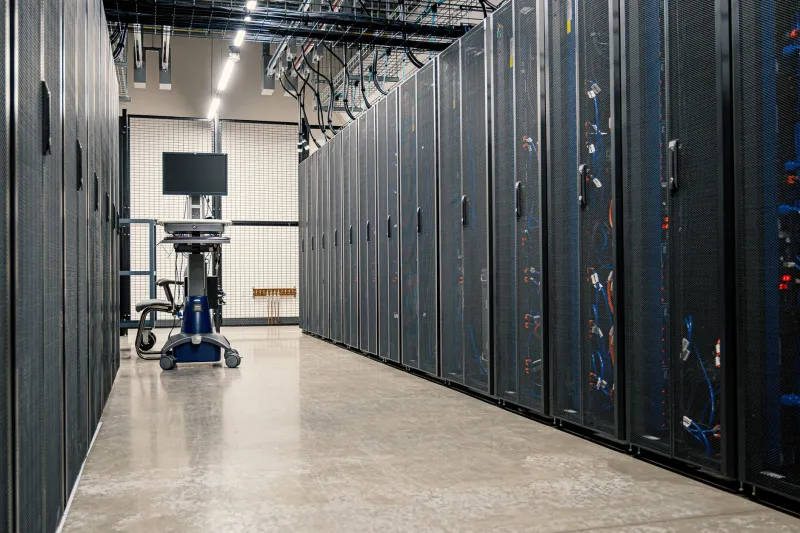
For years, the received wisdom in Australian software development has been straightforward: deploy to Sydney, or perhaps Melbourne, and consider the infrastructure question resolved. The major hyperscalers maintain their flagship Australian regions there. The talent pools cluster there. The enterprise sales cycles tend to originate there. It has been, for most development teams, the path of least resistance.
But least resistance is not always the same as best outcome. And for a growing cohort of API teams serving industries concentrated in regional Queensland, the Northern Territory, and the broader agricultural and resources corridors of northern Australia, that Sydney-centric default is beginning to look less like prudent engineering and more like an inherited assumption that has never been seriously interrogated.
The Hidden Tax of Distance
Latency is often discussed in milliseconds, which makes it easy to dismiss as a concern reserved for high-frequency trading platforms or real-time gaming infrastructure. The reality for enterprise API clients is considerably more nuanced.
Consider a logistics platform coordinating freight movements across the Bowen Basin, or an agricultural export system processing compliance data from receival stations scattered across the Burdekin. Every round trip between a field device and a Sydney-hosted API endpoint adds overhead. In isolation, forty or fifty milliseconds feels inconsequential. Across thousands of daily transactions, multiplied by the synchronous dependencies that characterise modern API architectures, that overhead compounds into something that manifests as sluggish user interfaces, degraded mobile experiences, and — critically — failed requests during the connectivity interruptions that remain a feature of regional Australian infrastructure rather than an exception.
Sub-100ms response times are no longer a premium expectation for enterprise clients. They are increasingly a baseline contractual requirement, appearing in service level agreements alongside uptime guarantees and security certifications. API teams that cannot demonstrate consistent performance within that threshold from the client's actual operating geography are finding themselves excluded from procurement conversations before technical evaluation even begins.
Data Residency Is Not a Bureaucratic Formality
Beyond raw performance, data residency requirements are reshaping infrastructure decisions in ways that reward regional specificity. Australian enterprises operating in health, resources, agriculture, and government-adjacent sectors face an increasingly complex overlay of obligations: the Privacy Act, sector-specific frameworks, and the expectations of international trading partners who have their own requirements about where data associated with their supply chains may be processed and stored.
The reflexive response — host in Sydney because it is Australian soil and therefore compliant — satisfies the letter of many requirements. It does not always satisfy the spirit, and it rarely satisfies the operational reality of clients who need to demonstrate to their own auditors that data generated in northern Queensland is processed and stored in a jurisdiction and at a facility that can be inspected, certified, and defended.
Regional hosting arrangements, where they can be made credible, offer something the capital city hyperscaler regions cannot easily replicate: a demonstrable, verifiable connection between where data originates, where it is processed, and where it resides. For enterprise clients building compliance narratives for export markets or regulated domestic sectors, that specificity has genuine commercial value.
Geography as a Moat, Not a Liability
The conventional framing positions regional location as a constraint to be managed — a gap between where a development team sits and where the serious infrastructure lives. That framing deserves to be inverted.
A Mackay-based API team that has invested in understanding northern Queensland's connectivity topology, that has built relationships with infrastructure providers operating in the region, and that has engineered its systems to perform reliably within the actual network conditions its clients face, possesses knowledge that cannot be easily replicated by a Sydney consultancy parachuting in to win a contract. That knowledge is earned through proximity, through operational experience, and through the kind of sustained attention to local conditions that only comes from being genuinely embedded in a region.
Enterprise clients in resources and agriculture have learned, sometimes expensively, that vendors who understand their operating environment outperform vendors who merely understand their technology stack. An API team that can speak credibly about the infrastructure characteristics of the Mackay to Townsville corridor, about the latency profiles of connections serving mine sites in the Galilee Basin, or about the compliance requirements of agricultural exporters operating through Dalrymple Bay, is not competing on the same terms as a generic cloud consultancy. It is operating in a different market segment entirely.
The Practical Architecture Question
None of this is to suggest that Sydney cloud regions should be abandoned wholesale. The hyperscaler footprint in New South Wales offers capabilities — managed services, global peering, ecosystem integrations — that cannot be replicated at the edge. The more productive question is where the latency-sensitive, compliance-critical components of an API architecture should be positioned, and whether the default assumption that everything belongs in the same region has ever been rigorously tested.
Edge deployment patterns, regional caching layers, and hybrid architectures that position compute close to where data originates while leveraging centralised services for workloads where proximity is less critical — these are not exotic engineering choices. They are increasingly standard responses to the performance and compliance requirements that enterprise procurement teams are codifying into contracts.
For API teams based in regional Queensland, building fluency with these patterns is not optional infrastructure sophistication. It is the foundation of a credible enterprise proposition.
Turning Proximity Into a Commercial Argument
The final piece of this puzzle is commercial translation. Technical teams are generally comfortable with the engineering case for proximity-aware infrastructure. They are less consistently effective at translating that case into the language of enterprise procurement, where decisions are made by people who care about risk reduction, compliance assurance, and demonstrable service levels rather than architectural elegance.
The regional API team that learns to articulate its infrastructure proximity as a risk management proposition — framing lower latency as reduced exposure to SLA penalties, and local data residency as a defensible compliance position — is speaking a language that resonates with the people who sign contracts. That translation work is not glamorous, but it is where geography stops being a conversation about milliseconds and starts being a conversation about competitive differentiation.
The distance between Mackay and Sydney is roughly 1,000 kilometres. For the right clients, in the right sectors, that distance is not a disadvantage to apologise for. It is a specification to sell.